Bang Bang Bang: Speaking in Tongues
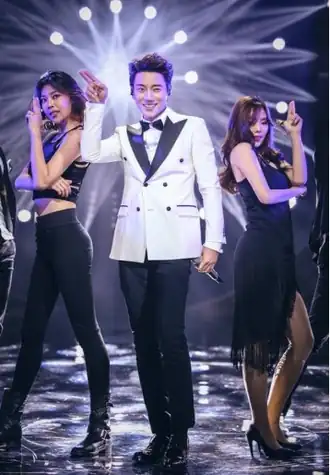
Excerpt from my article “Bang Bang Bang—Nonsense or an Alternative Language?: The Lingualscape in the Chinese Remake of I Am a Singer,” China Perspectives, no. 3 (2019): 37–45. DOI · French version
Abstract
Through examining the Chinese remake of the Korean television program I Am a Singer, I explore the questions of how a Chinese musical television reality show performs and represents the newly rising aesthetic demands for de-territorialising what I term the “lingualscape,” the shifting landscape of languages intermingled with and liberated from standardised national languages; and how it interplays with affective negotiation in the practices of translation or transplantation within the context of cultural de-territorialisation. This Sino-Korean musical TV program demonstrates nonethnic-centred imaginings across national and state-sanctioned ideological boundaries. The lingualscape performs affective negotiation and rises above the official lingual system, a process through which sincere communication becomes possible in a digital time.
“Language shapes thoughts, and thoughts guide actions.”
Read this passage in the journal ↗Speaking in Tongues
Music has long been a medium for expressing people’s hidden longings, pouring out their emotions, and bearing their hopes. Transnational fandom is built on the shared affective experiences generated when watching the show, and reinforced further in intentional communities formed to express and share sorrow, joy, sadness, happiness, fury, and the dissatisfaction of partially understanding the multilingual lyrics. Such moments suggest an acknowledgement of linguistic pluralism and a playful mechanization in the form of entertainment. “Glossolalia” – speaking in tongues – (Heller-Roazen 2014: 594) becomes a way to communicate in the individual domain through the co-consumption of collaborative screen culture, wherein standard official languages are absent.
Language shapes thoughts, and thoughts guide actions. While officially sanctioned languages can be distorted by various prohibitions and proscriptions, singing through a hybridised language that is not officially constructed might perhaps create space for a new order within which official-sanctioned ideologies are deconstructed and sincere communication is possible. This is a process of building new order through language use that is mediated by the de-territorialising lingualscape based on visual and intuitive modes of communication. This lingualscape imagines a new ordering of various dimensions of language, culture, and ideology, and it reconstructs the ways that audiences speak, think, and act.
Related concept: Lingualscape · This argument also informs Riding the Korean Wave in China (under contract with University of Michigan Press).
Please be aware that the content on this website is protected by intellectual property laws. Any unauthorized reproduction, distribution, or use of the content without my permission is strictly prohibited. If you are interested in using any of the content, please contact me directly to discuss proper attribution and usage.